
Lesson 1: the Basic process of SBCPD
Page 1
Reflective practice for teacher CPD
The way teachers teach can have a big impact on how learners learn. However, it is not enough just to present information to a class.
In order to help students learn, teachers must assess the impact of their teaching on student learning, and make improvements. For example, teachers can ask students questions to check what they have understood. Teachers can observe students during an activity to see what they can do. Teachers should think about and try out ways to improve, and then assess learners’ knowledge and skills to see how successful teaching has been. This process is often called ‘reflective practice’.
Figure 19 below shows reflective practice as a cycle with 3 stages: See, Plan and Do. Teachers can follow the cycle in any order. For example, they may begin at the ‘Do’ stage, as they apply a new teaching method or activity that they have learned. They can then ‘See’ the impact that it has on student learning and make plans to adapt and improve it further.
The reflective practice cycle can be applied in different ways during school practice, induction and as part of school-based CPD. For example, trainees or NQTs are supported to write lesson plans as a guide for teaching (Plan). They are observed and receive feedback (See). They use this feedback to improve their plans (Plan), and they put the new plans into practice (Do). During each cycle, their understanding and practice improve.
The key for CPD is supporting teachers to make regular links between knowledge and practice. With enough guided practice, reflective thinking becomes a habit and teachers drive their own development.
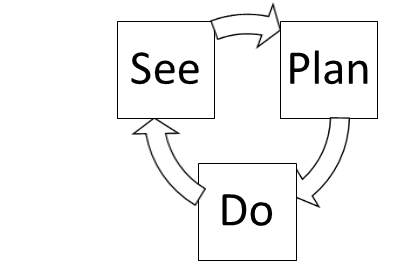
Figure 19 Reflective Practice Cycle
This is the end of Lesson 1.